Why God Chose the Long Way
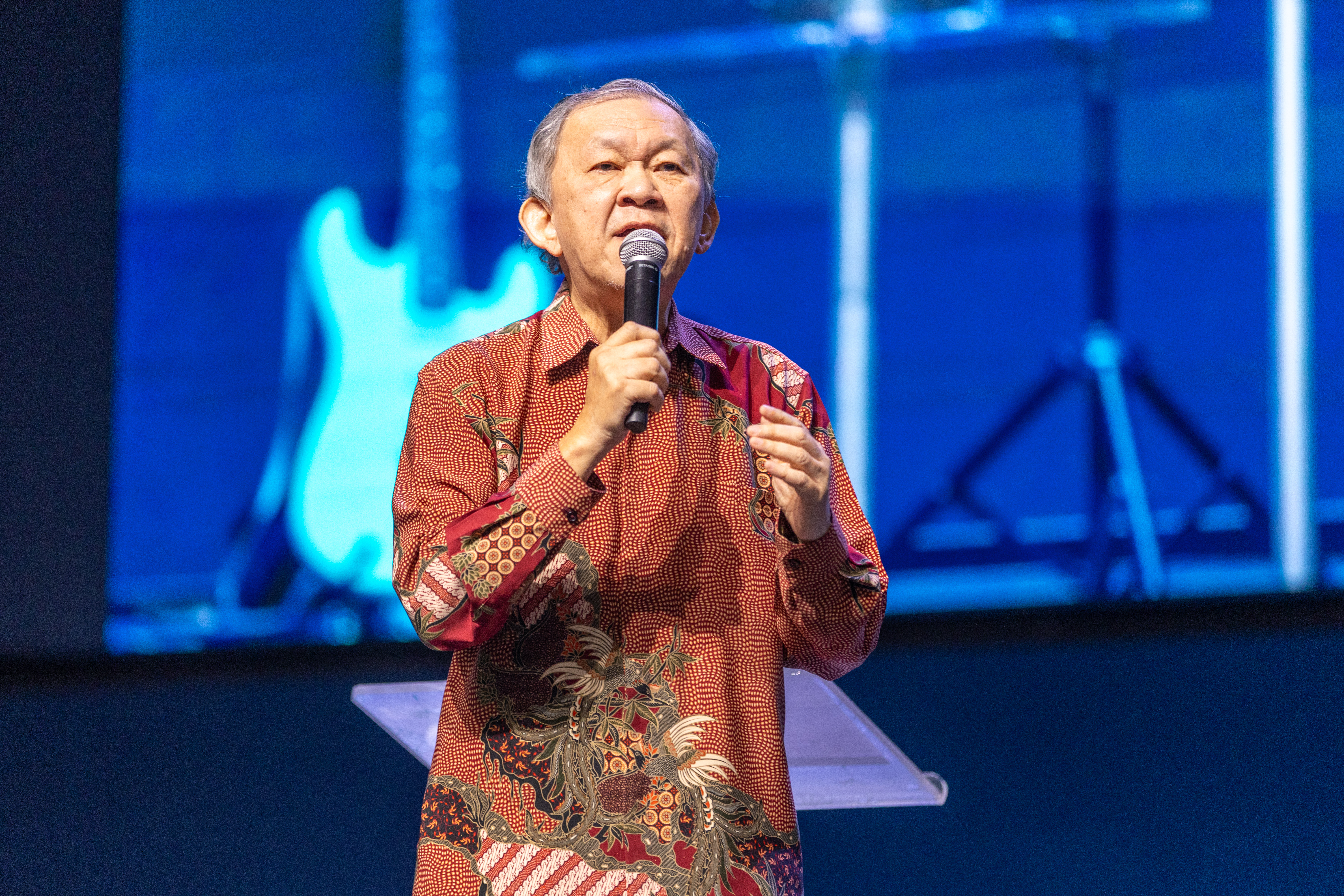
by Bishop Ong Sek Leang
26 July 2026
Key Texts: Exodus 13:17-18; Numbers 10:1-4; Numbers 11:1-4, 11-17
Theme: God deliberately routes His people the long way not to frustrate them but to form them -- and the church that will go forward is one that moves like a soldier: deployed through proper relationship, disciplined through proper attitudes, and delegated through spiritual impartation.
The Long Way Is the Right Way
Exodus 13:17-18 contains a surprising detail: God deliberately did not lead the children of Israel by the shortest route to the Promised Land. The coastal road through Philistine territory was far shorter, but God said, "Lest perhaps the people change their minds when they see war, and return to Egypt." So He led them the long way, around by the wilderness of the Red Sea. The distance between Egypt and the Promised Land was never the problem -- the readiness of the people was. God does not only want to bring believers out of something; He wants to bring them into something. Going forward is not simply a matter of desire -- everyone wants to advance. What makes the difference is the quality of the person making the journey. The Bible says the children of Israel came out of Egypt in orderly rank, arranged like soldiers. That is the posture God is looking for in those who will go forward.
Application:
Consider whether a long or difficult season in your life right now may be God forming the readiness required for what lies ahead -- and choose to trust His route rather than resent it.
Deployment Through Proper Relationship
Numbers 10:1-4 describes two silver trumpets used for three purposes: calling the congregation, directing the movement of the camp, and sounding the advance. An army is useless unless it can be deployed, and deployment requires a clear chain of command. When Moses blew the trumpet, the farmer stopped plowing, the merchant stopped trading, and the whole camp oriented toward central command. This principle runs in both directions: the congregation must hear and follow its leaders, and the leaders must blow a distinct trumpet so the people know where they are going. Equally, each tribe had a fixed position and a fixed neighbour -- there was no place for "charismatic individualism," choosing one's own position based on preference or gifting. The kingdom of God is not led by spiritual gifts; it is led by spiritual authority. Lucifer fell not because he lacked ability -- he was the most gifted worshipper in heaven -- but because he rejected spiritual authority. The church moves forward together, or it does not move at all.
Application:
Examine your posture toward the spiritual authority in your life and identify one area where you can choose to follow before you fully understand.
Discipline Through Proper Attitudes
Numbers 11 opens sharply: the people complained, and it displeased the Lord. Despite ten plagues, the parting of the Red Sea, water from a rock, and manna six mornings a week, Israel still complained -- first no water, then not enough food, then not enough variety. Complaining, the message argues, is rarely about the stated problem. It is the carnal nature finding weaknesses in the system to justify disobedience. The parking is bad. The sermon is too long. The songs are unfamiliar. Behind each complaint is almost always an excuse not to obey. At the root was self-centredness -- an ingratitude that forgot they had been slaves with nothing, that everything was given by grace alone. The "mixed multitude" that came out of Egypt with them further fuelled this spirit, constantly pressing the people to question, compare, and deviate from the vision. The church that goes forward is not the church that never faces hardship; it is the church that endures hardship without losing its direction.
Application:
Identify one recurring complaint about your church or circumstances and ask honestly whether it is a genuine concern or an excuse that is keeping you from full obedience.
Delegation Through Spiritual Impartation
In Numbers 11:11-15, Moses reaches a breaking point. Crushed by the demands of leading a complaining multitude alone, he prays what is essentially a suicidal prayer: "If You treat me like this, kill me here and now." It was never God's intention for any leader to carry the ministry alone. God's answer was to gather seventy elders -- men of credibility already known and respected by the people -- and to bring them to the Tabernacle of Meeting, where He would place the same Spirit upon them. Three qualities mark those fit for this kind of delegation: credibility, so that they are already recognised; a personal encounter with God, so that they know how His voice and will sounds; and an acceptance of the vessel through whom God works. The religious leaders of Jesus' day rejected Him not because of His teaching alone but because of who He was -- a carpenter's son, not a priest. The same dynamic repeats: people resist the leader whose personality they find unexpected. Yet ministry, as one writer put it, is the personification of the word in a human personality -- shaped by the person's history, wounds, and encounter with God. Metro Tabernacle began as the smallest and least resourced of seven churches, planted in a community 99% of a different faith. Today it stands beside the largest Hindu temple in Malaysia -- a fulfilment of a word spoken decades earlier: give me these hills. The vessel was unexpected. The route was the long way. The outcome was unmistakably God.
Application:
Think of a leader God has placed in your life whose style or background you have found difficult -- and make a deliberate decision to honour the anointing on them rather than the personality around it.
Rise Up and Advance
Numbers 11:16-17 closes with a principle the whole sermon has been building toward: God placed the same Spirit that was on Moses upon the seventy elders, so that they could bear the burden of the people together. Delegation is not only the sharing of tasks -- it is the sharing of anointing. Those who carry responsibility in the church must have their own encounter with God, their own sense of His voice, their own interior life that sustains them when the work is hard. And every believer who wants to go forward must accept that God chooses His vessels sovereignly -- not by legacy, not by pedigree, not by the size of the church one comes from, but by the will of the Father. Judah moves first not because Judah earned it, but because God chose Judah. That is enough. The call of this message to every member of the church is the same call that went out to Israel at the edge of the wilderness: rise up, take your place, stay in relationship, refuse to complain, and advance.
Application:
Identify one specific way you can stand alongside your church's leaders or ministry teams this season -- not as a spectator but as a fellow soldier who has shown up and said, here am I.
Life Group Reflection Questions
1. God took Israel the long way because they were not yet ready for what the short route would expose them to. Looking at a prolonged or difficult season in your own life, is it possible God is routing you the long way for a reason? What might He be forming in you that a faster path would not produce?
2. The message makes a sharp distinction: the kingdom of God is led by spiritual authority, not spiritual gifts. Have you ever found it difficult to follow a leader who seemed less gifted than you, or to submit to a decision you disagreed with? What does the image of the camp -- each tribe in its fixed place, moving in fixed order -- say about how God builds a church?
3. The message argues that complaining is rarely about the stated grievance -- it is the carnal nature looking for an excuse not to obey. Thinking honestly about your own life, are there complaints you have been nursing that may actually be covering a deeper reluctance to commit? What would change if you addressed the obedience rather than the grievance?
4. Moses reached suicidal exhaustion carrying the ministry alone, and God's answer was not to make Moses stronger but to raise up seventy others to share the load. Is there a leader, pastor, or ministry worker in your church who may be carrying too much alone? What would it look like for you to step up and stand alongside them?
5. Philip Brooks wrote that ministry is "the personification of the word in a human personality." Every leader's ministry is shaped by who they are -- their background, wounds, and particular encounter with God. Think of a leader God has placed in your life. In what ways has their specific personality and story been part of what made their ministry meaningful to you -- and how does recognising this change how you receive them?
Closing Summary
This message asks a simple question: why would God take the long way when a short route was available? The answer is formation. The church that goes forward is deployed through proper relationship -- hearing the trumpet and moving in order; disciplined through proper attitudes -- refusing to let self-centredness and complaint rob them of direction; and delegated through spiritual impartation -- sharing both the burden and the anointing. The route may be longer than expected and the vessel God chooses may be unexpected. But the destination is certain. The word for the church today is: advance.