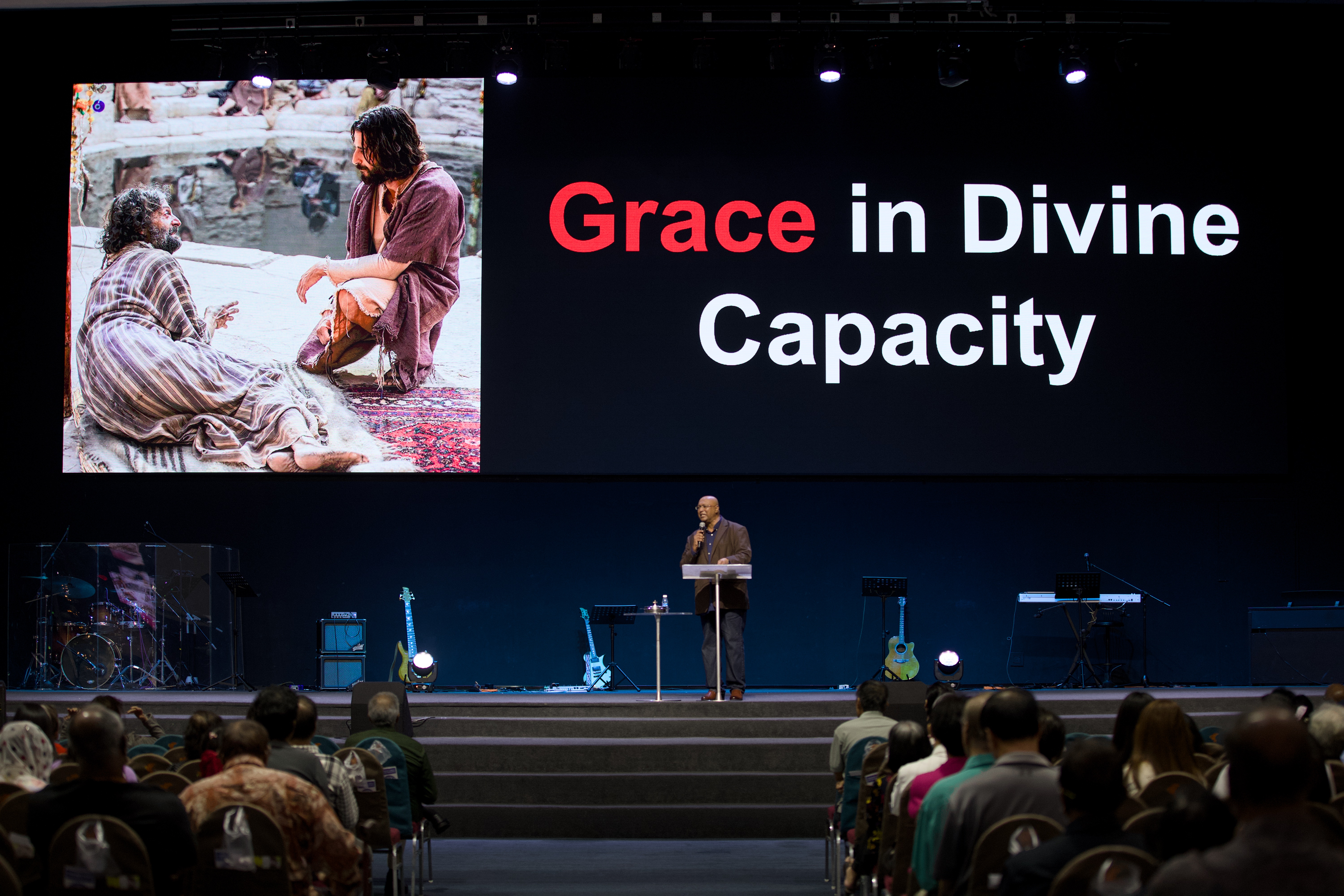
Grace in Divine Capacity
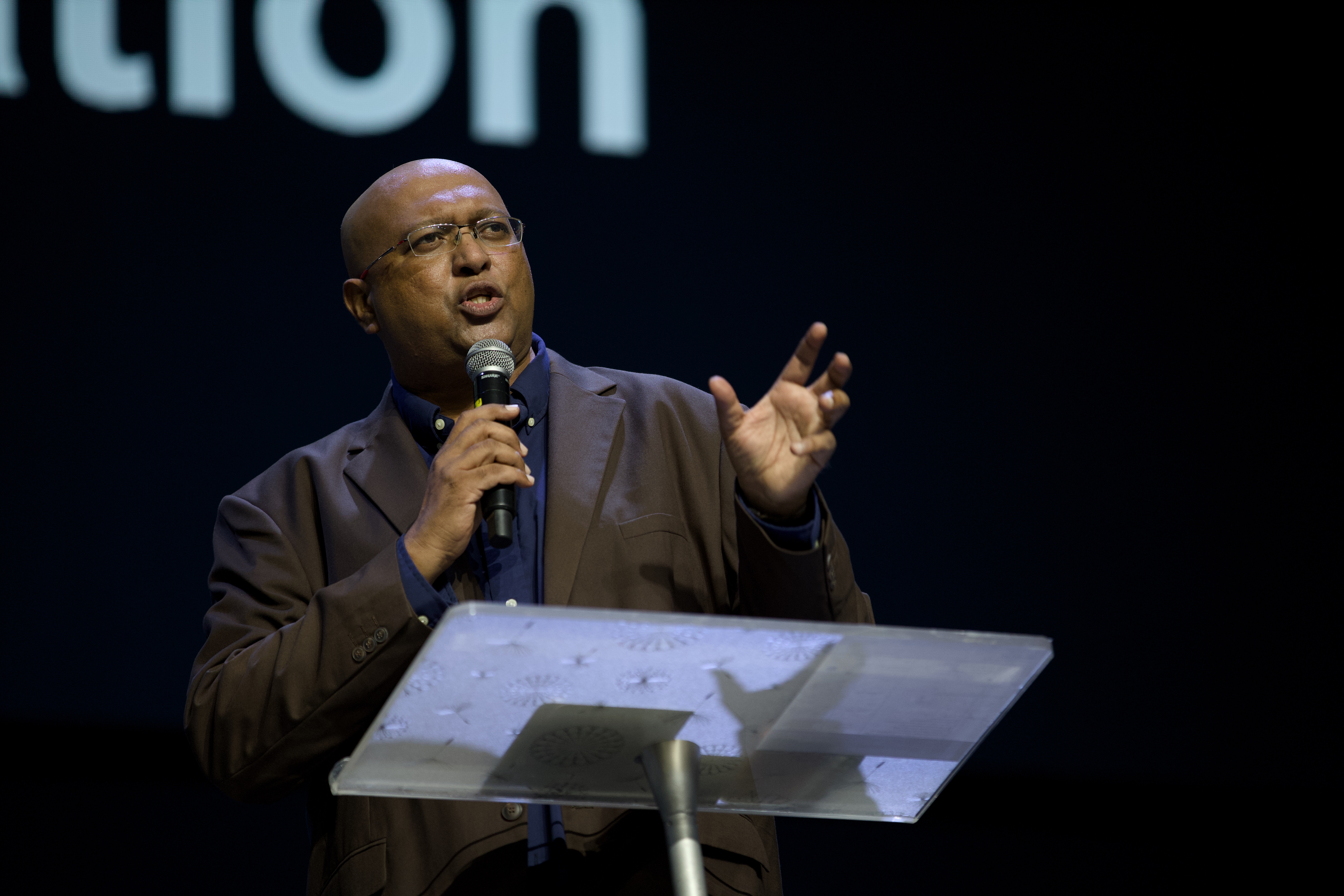
by Pastor Sean Prasad
22 November 2026
Key Texts: John 5:1–9, Psalm 62:5, Romans 8:37, Philippians 4:13, 2 Corinthians 12:9
Theme: Grace in divine capacity means that Jesus meets the paralyzed, dependent, and excuse-making believer where they are, confronts their present condition, and calls them to rise, take up their mat, and walk in the strength He provides.
Pardon, Power, and Promise Each Sunday
The message opens with a reminder that every Sunday, when believers come into the house of God, they receive three things from Him. First, they receive pardon for the past, which means forgiveness from God. Second, they receive power for the present, a strength the message links to hope for tomorrow. Third, they receive promise for the future, the promises of God that believers carry out of the sanctuary. The message presents this as sufficient reason to come to church, because each gathering brings forgiveness and renewed hope. Believers are encouraged to remember this pattern every week.
Application:
Come to worship each Sunday expecting pardon, power, and promise from God, and carry those promises with you when you leave the sanctuary.
The Question at the Pool of Bethesda
John 5:1–9 records a feast in Jerusalem and a pool called Bethesda near the Sheep Gate, with five porticoes. A great multitude of sick, blind, lame, and paralyzed people lay there waiting for the stirring of the water. Among them was a man who had been paralyzed for 38 years. Jesus saw him and knew how long he had been in that condition. He asked, "Do you want to get well?" The message notes that the question, in the original Greek, points to what Jesus has to give: do you want what I have for you?
The man did not answer the question directly. He explained that he had no one to put him into the pool when the water was stirred, and that another went down before him. Jesus responded with a command: "Rise, take up your bed and walk." The man was made well immediately, took up his bed, and walked, and the message notes that this took place on the Sabbath.
Application:
Hear Jesus's question to you today, "Do you want to get well?", and answer it honestly rather than explaining why it cannot be done.
Paralysis Rooted in Dependency
The message identifies the core issue at Bethesda as dependency rather than healing itself. The man relied on someone else to get him into the water, waiting on another person for his breakthrough, his healing, and his miracle. The message applies this to believers who depend on people more than on God for life, dreams, desire, and destiny. Dependence on a spouse or another person for happiness cannot replace the joy that God gives. When people depend on others more than on God, they fail to see the fullness of God's purposes for their lives. Psalm 62:5 is cited, rendered in the Good News Translation as "I depend on God alone," and the message concludes that believers must depend completely on the Lord Jesus Christ.
Application:
Examine where you have placed your hope for healing, provision, or happiness in people, and deliberately bring that dependence back to the Lord.
Paralysis in Faith, Praise, and Ministry
The message defines paralysis as lack of mobility, lack of action, and lack of growth, a perpetual state of stagnation. It notes that paralysis can affect many areas of life, including faith, dreams, hope, peace, joy, destiny, and ministry. The message also applies this to anointing, praise, and worship, which believers are called to exercise fully. The sermon's point is that a believer can have faith, hope, or calling in place while those gifts remain unused. Naming these areas helps believers recognize where stagnation has settled in.
To illustrate, the message describes wind turbines on a wind farm, where most turbines are turning but one or two remain still. It compares this to a congregation in which most people are praising God with raised hands, while a few stand still. The message encourages believers to worship with their whole being, not holding back. It calls for a fully engaged praise that reflects the believer's calling to glorify God.
Application:
Examine your own praise and worship this week, and ask God to release any part of your life that has become still.
Causes of Spiritual Paralysis
The message names several causes of paralysis, beginning with sin, especially hidden sin that a believer may not recognize. Fear and failure are also named, as a person who has failed once may be afraid to try again. Religious condemnation is listed as another cause that keeps believers from moving forward. The message further identifies victimization, contrasting a victim mindset with the identity believers have in Christ. It cites Romans 8:37, which says believers are more than conquerors.
The message also lists broken relationships, unforgiveness, and unbelief as sources of paralysis. These causes are presented as areas where the believer remains stuck and needs the freedom that Christ provides. The message calls believers to recognize that they are not victims but victors in Jesus Christ. Naming the specific cause is presented as the first step toward being released from it.
Application:
Name the specific sin, fear, failure, or wound that has kept you still, and bring it to God in confession and prayer.
Identity Received, Not Validation Sought
The message observes that people constantly seek permission and validation, and that social media intensifies this longing for approval through likes. It cites Oprah Winfrey's observation that, among the more than 30,000 people she interviewed, every one shared a common denominator: validation. The message warns that people who do not receive likes can respond with hurt, even blocking others, and that this reflects a deeper need. It contrasts likes with love, saying that believers are not defined by the likes of many but by the love of one, Christ Jesus our Lord.
The message explains that receiving the love of God makes believers children of God, and that this is their identity. This identity gives purpose to serve God, because believers are loved by Him. The message quotes worship leader Ricardo Sanchez, who said that the devil knows your name but calls you by your sin, while God knows your sin but calls you by your name. Believers are therefore described as champions, warriors, and overcomers, not defined by their shortcomings.
Application:
Receive your identity from the love of God rather than from approval, likes, or the labels others have placed on you.
Grace That Meets Wrong Answers
The man at Bethesda gave a wrong answer to Jesus's right question, offering excuses about having no one to help him into the pool. The message notes that God does not answer every complaint-filled prayer, and it quotes Ruth Graham: "If God answered all my prayers, I would have married the wrong man." The message frames this as grace in divine capacity, because God is not bothered by shortfalls, shortcomings, or lack of faith. Jesus did not require the right words or perfect faith before He healed the man. The message says that the difference was made by Jesus, not by the man's answer.
The message states that Jesus confronts the present condition, speaks into the future, and demands that the believer let go of the past. It notes that a person cannot hold on to the mat that holds them down. The message emphasizes that grace does not depend on a person's knowledge of Scripture or articulate prayer. It concludes that the focus is not on what the believer does for God, but on what He has done for the believer.
Application:
Bring your excuses and imperfect words to Jesus honestly, trusting that His grace reaches beyond your shortfalls and your lack of faith.
Rise, Take Up Your Mat, and Walk
The message calls believers not to remain paralyzed, even when they are anointed, empowered, and have received many prophecies. It names faith, hope, and ministry as areas where believers may have stopped moving, and it declares that it is time to get up. The message reminds believers that they are not defined by the hell they are going through but by the heaven they are going to. It calls believers to be heaven-bound, which gives them reason to rejoice.
The message closes with a call for believers to stand and lift their hands in prayer. Believers are invited to say that they do not want their faith, hope, dreams, or calling to be paralyzed. The prayer asks God to go beyond shortfalls, shortcomings, worries, and failures. The message ends with the request that God would help believers in this moment.
Application:
Stand and pray, asking God to remove the paralysis in your faith, hope, and ministry, and then take the next step He shows you.
Life Group Reflection Questions
1. Jesus asked the man at Bethesda, "Do you want to get well?" Where in your life is the honest answer to that question more complicated than it first appears, and what makes it so?
2. The man depended on someone else for his breakthrough. Which person or circumstance have you come to rely on in ways that belong to God alone, and what would it look like to shift that reliance back to Him?
3. The message compares a congregation to a wind farm where most turbines turn but one or two stay still. What does it look like for your group or church to praise and serve fully, and how might members encourage one another to move?
4. The message names victim mindset, unforgiveness, and religious condemnation as sources of paralysis. Which of these has been hardest for you to release, and what would it take to bring it honestly to Christ?
5. The message says God is not bothered by our shortfalls, shortcomings, or lack of faith, and it quotes Ruth Graham on unanswered prayers. How does this grace shape the way you approach God in prayer when your words feel inadequate or your request feels wrong?
Closing Summary
This message traces a single thread: grace in divine capacity, the grace of God that reaches the paralyzed, the dependent, and the one who gives the wrong answer. At Bethesda, Jesus asked a man who had been paralyzed for 38 years whether he wanted to get well, and though the man offered excuses, Jesus said, "Rise, take up your bed and walk." From dependency on others to paralysis in faith and worship, from sin and fear to a validation-driven identity, the pattern holds: Jesus meets the believer where they are and calls them to rise. Each Sunday, the believer receives pardon for the past, power for the present, and promise for the future. The call of this message is to stop waiting on others, lay down excuses, and stand up in the strength He provides.